
The Basquiat Clone Epidemic
The Paradox of Creativity

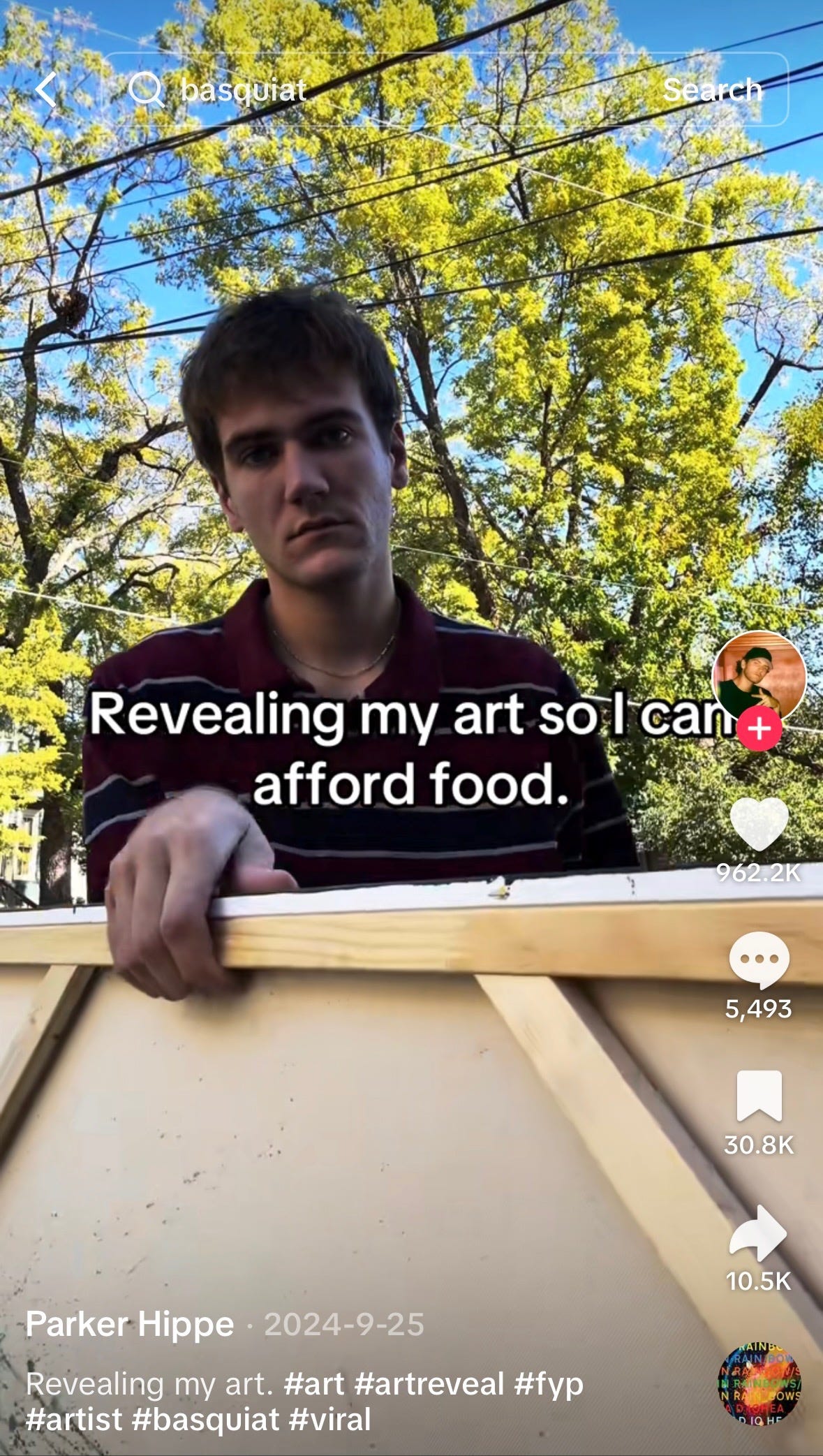
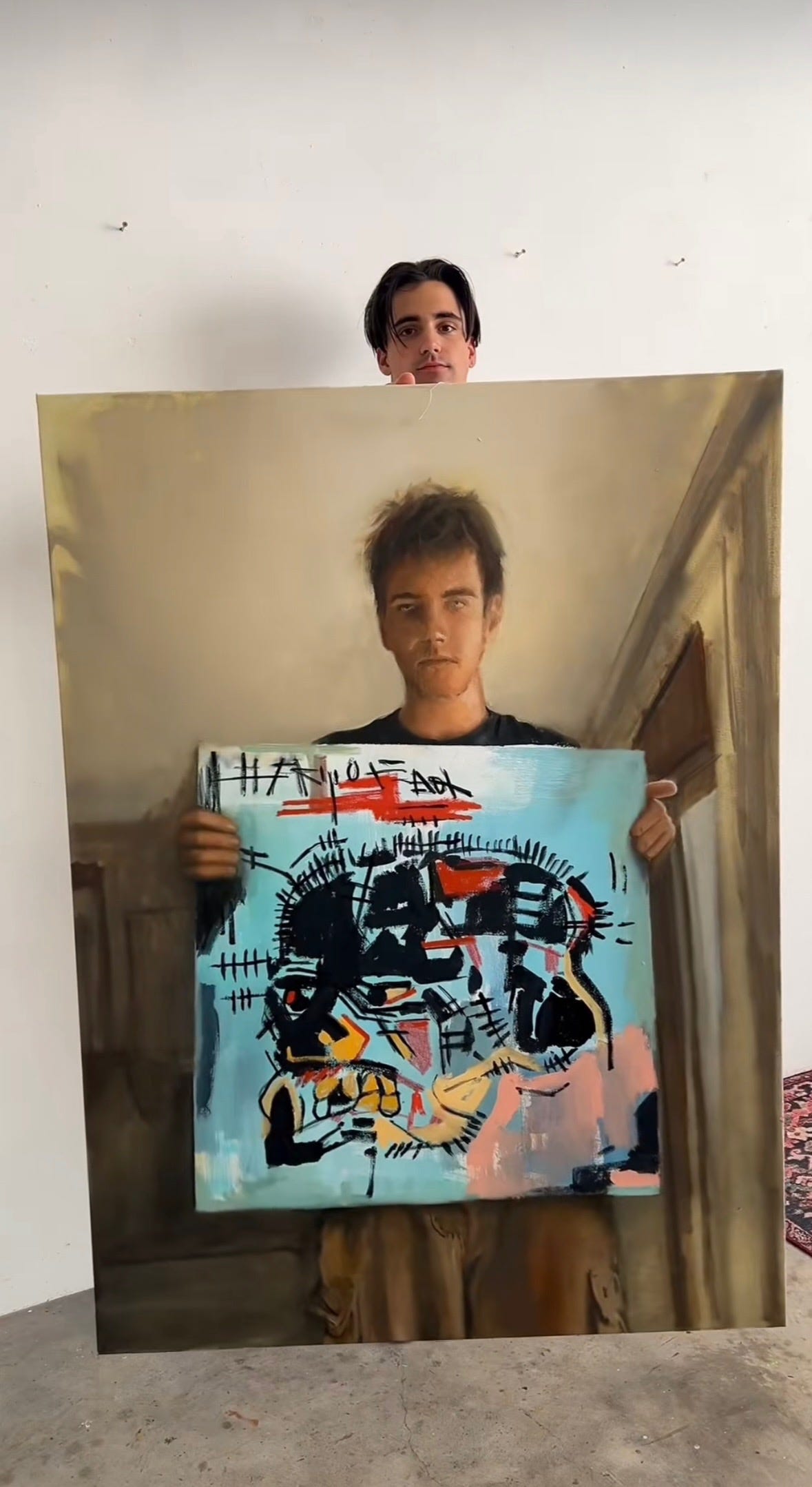
Starting in the fall of 2024, a surge of predominantly Caucasian male artists appeared on TikTok showcasing their art with the intention of affording rent or quitting their traditional 9-to-5 jobs. Originally traced to creator Parker Hippe, these videos often featured dramatic narratives that suggest breaking free from societal constraints. However, when the curtains fell and the canvas was flipped, the anticipated “revolutionary” work almost always bore an uncanny resemblance to the art of Jean-Michel Basquiat.
Basquiat was a Jamaican-American pioneer of abstract and neo-expressionism. He often drew inspiration from his New York upbringing, Jamaican heritage, and deep love for jazz and poetry. His work was revolutionary in the 1980s — infused with raw emotion and cultural commentary that challenged societal norms and reflected his experiences as a Black man in America. Despite this profound cultural significance, the TikTok trend creates controversy surrounding authenticity, creativity, and cultural appropriation.
Unlike Basquiat, who employed his art to navigate and express identity within a society that marginalized him, many of these TikTok artists adopt his style devoid of cultural context or an understanding of his adversity. This becomes particularly problematic when they profit off a style rooted in struggle and resistance. Is this trend an homage, or the commodification of a cultural legacy?
This epidemic also invites a conversation about creativity and privilege. Under late-stage capitalism, where the cost of living is high and wage stagnation is rampant, the pressure to escape the 9-to-5 hamster-wheel grind is palpable. For many, this translates into the pursuit of online virality as a means of financial freedom. Yet, creativity today seems increasingly linked to privilege. The reality is that it is challenging to tap into creativity when juggling multiple jobs to scrape by has become the norm. Conversely, the 80s fertilized the streets of New York for experimentation and authenticity. The era of Postmodernism provided artists with affordable living and communal spaces like the Chelsea Hotel.
The trend also raises questions about originality itself. Some may argue that all art is derivative. They might even evidence that Basquiat was influenced by abstract expressionists, jazz, poetry, and street culture. However, the difference lies in intention and context. Basquiat’s work paralleled his lived experiences and cultural identity, making it deeply personal and political. In juxtaposition, these “Basquiat clones” often replicate his style without engaging with the underlying narratives or acknowledging the historical and cultural significance of his work.
Ultimately, the Basquiat impersonation on TikTok exposes the tension between inspiration and appropriation, between homage and exploitation. It serves to challenge the ethics of creativity in the digital age. But in true TikTok fashion, perhaps it’s not that deep. Maybe it’s simply satire — a satirical jab at the commodification of struggle as an aesthetic. In an era where irony and sincerity are often layered peels of a glass onion, maybe the joke’s on us. That, my fellow reader, is for you to discern.
this inspired me to look up the history of art! and i don't wanna be that person but i feel like "expressionists" are either very trained artists or people who smear paint on the places that feel "right" to achieve abstraction